
DTF Powder Curing
In the world of professional garment decoration, the adhesive backend is the true secret to graphics longevity. To achieve true apparel brilliance, print shops must focus deeply on the exact science behind the chemical bond. Implementing premium adhesive layers and a strict, optimized DTF powder curing sequence are the two defining pillars of a high-end, commercial-grade custom transfer.
Even the most vibrant pigment ink set will fail prematurely if the underlying adhesive barrier does not establish a strong, ultra-flexible connection to the fabric weaves. This professional operational guide explores how to master your workshop melting parameters to prevent cracking, peeling, and fading over time.
1. Why Premium Hot Melt Powder DTF Adhesives Matter
Not all thermoplastic adhesives deliver the same wash performance. Commercial-grade apparel operations in 2026 carefully avoid generic or low-grade adhesive blends to protect their retail brand reputation and minimize customer returns. Selecting a high-tier TPU hot melt powder dtf formula ensures absolute material stability:
- Consistent Grain Size: Premium powders maintain a uniform, calibrated particle diameter. This granular precision ensures the adhesive sticks strictly to the printed wet ink zones, entirely eliminating background powder speckling on the clear transparent film carrier.
- Moisture and Humidity Resistance: Advanced adhesive formulas are chemically treated to resist ambient workshop humidity, preventing powder clumping inside the shaker machinery.
- Superior Elasticity: High-grade polyurethane compositions allow the finished transfer graphic to stretch fluidly alongside the garment fibers, preventing premature cracking on high-flex wear items like hoodies and activewear.
- Opaque Foundation: A clean, uniform white adhesive backing provides an extra opaque layer, ensuring your colored designs pop vibrantly on dark or black textiles.
2. The Science of the Perfect Melt (Curing Process)
The dtf powder curing sequence involves applying precise thermal control to transform loose, dry granules into a completely smooth, continuous, and highly sticky resin layer. This process requires absolute temperature and duration precision:
- The "Orange Peel" Visual Standard: A perfectly cured transfer must display a uniformly melted texture reminiscent of a glossy orange peel. The granules must be fully melted without turning into an over-liquefied puddle.
- The Danger of Under-Curing: If your oven or dryer temperature runs too low, the core adhesive powder will not liquefy completely. This results in weak textile penetration, causing the transfer to peel off after the very first laundry cycle.
- The Danger of Over-Curing: Subjecting the film to excessive heat or prolonged curing cycles boils the adhesive layer, making it brittle. This destroys the soft-hand feel and causes early cracking when the fabric stretches.
3. Scaling Production with Automated Reliability
For custom print shops handling heavy commercial orders, manual powder application and batch oven processing create immediate operational bottlenecks. Automated finishing setups are essential for maintaining 2026 quality baselines at scale.
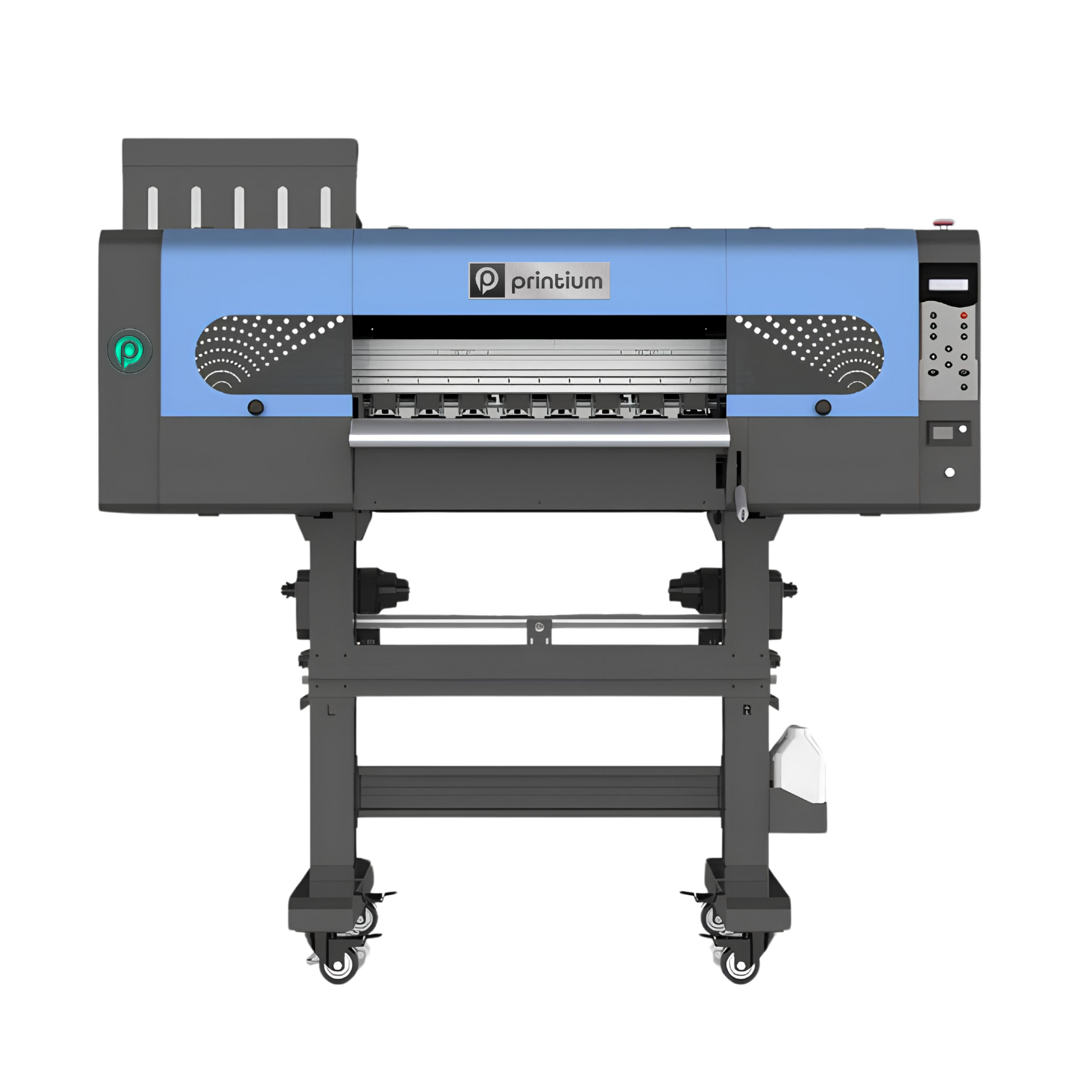
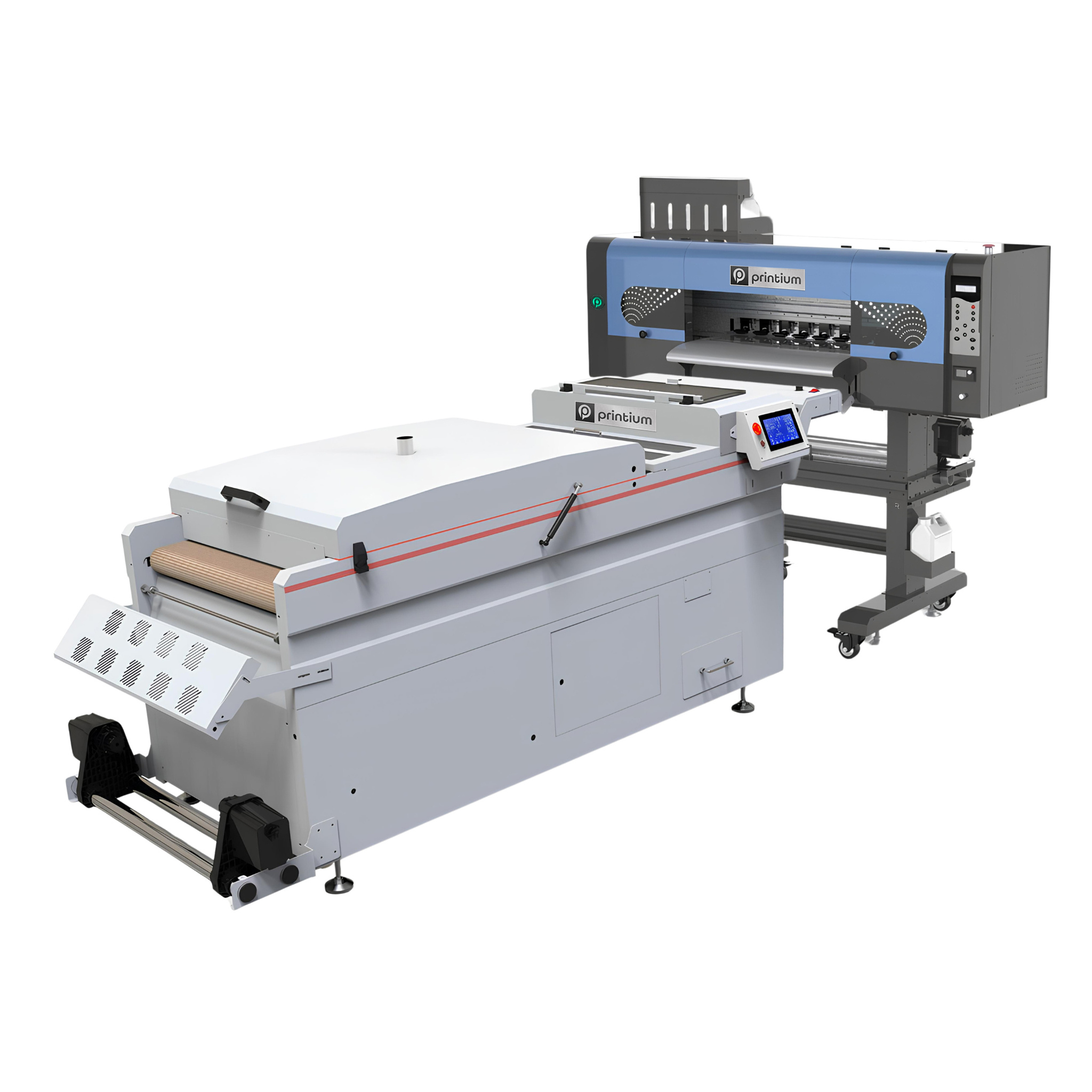
High-volume workshops deploy industrial 24-inch inline printer configurations working in absolute harmony with automated powder shaker dryer units. These industrial lines automatically apply the exact same volume of hot melt powder dtf adhesive across meters of film, execute an optimal vibrating cycle to shake off non-printed excess, and pass the media through an extended radiant infrared heating tunnel. This continuous mechanical flow guarantees identical curing results from the first inch of the roll to the last, while significantly lowering total production waste by recycling unbonded powder back into the main hopper.
4. Pro-Tips for Maximum Textile Adhesion
Follow these standardized workshop rules to ensure your custom apparel transfers pass rigorous structural wash tests:
- Controlled Storage Conditions: Always store your bulk adhesive supply in an airtight container away from moisture sources. Utilize silica gel packets inside the container to absorb ambient humidity.
- Garment Dehumidification: Always pre-press your blank t-shirts or hoodies for 3 to 5 seconds before positioning the transfer sheet. This purges trapped humidity and moisture from the fabric fibers that would otherwise block the adhesive bond.
- Calibrated Pressure Distribution: Utilize an accurate pneumatic or hydraulic moving head heat press to firmly drive the melted adhesive deep into the textile weave.
- Mind the Peeling Instructions: Ensure your production team follows the exact thermal profile of your film carrier media—allowing cold-peel film layouts to cool down completely to room temperature before removing the liner sheet.
Conclusion: DTF Powder Curing
The precise execution of your dtf powder curing parameters defines the commercial durability of your custom apparel line. By prioritizing premium, uniform adhesives and utilizing industrial inline heating hardware, you guarantee 50+ wash cycles while maintaining the ultra-soft feel that modern retail clients demand.
Upgrade Your Adhesive Quality Standards Today
Don't let a weak chemical bond cause cracked prints or peeling garment orders. Give your transfer graphics the commercial-grade foundation they deserve.
Explore our premium warehouse stock to shop our DTF powders at DTF Print Depot and secure industrial-grade elasticity and wash-fastness for your print business today!